Jersey cattle
Anne of AvonleaJersey cattle appear in Anne Shirley as household animals whose movement across farm boundaries can become a source of conflict and whose care depends on the conditions of rural life. Anne’s cow, Dolly, is given to her by Matthew Cuthbert as a calf; her repeated entry into J. A. Harrison’s oatfield leads first to a quarrel and later to a mistaken sale that Anne attempts to make right. The novel also places cattle within Avonlea’s wider vulnerability to drought and destructive weather, though it does not identify the animals affected by the storm as Jersey cattle.
Dolly and Her Ownership
Anne identifies the cow that has entered Harrison’s oats as her own, not Marilla Cuthbert’s. She explains that Matthew gave her the animal three years earlier, when it was a calf bought from Mr. Bell. That account makes Dolly a personal possession and a reminder of Anne’s bond with Matthew, rather than simply part of the Cuthbert household’s livestock.
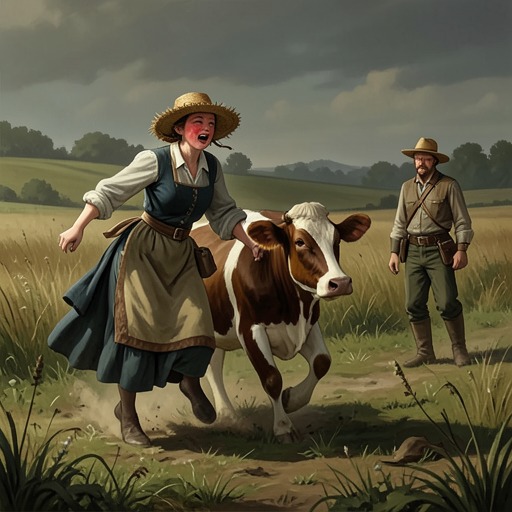
The first dispute begins after Harrison finds the cow in his oats for the third time. Anne accepts that the animal has caused damage, but points out that the fence on Harrison’s side of the boundary is in poor repair. She promises that Dolly will not enter the field again, then shuts the Jersey cow in the milking pen. The episode sets two explanations of the trespass beside one another: the cow’s repeated access to the crop and the inadequately maintained fence between oatfield and pasture.
The Oatfield Dispute and Sale
The promise does not prevent a second encounter. Returning from Carmody with Diana Barry, Anne sees a Jersey cow standing among Harrison’s late oats. She hurries across the fence to drive it out. Later, she recounts that she had shut her own cow in the pen the previous day; nevertheless, after returning from Carmody, she found a Jersey cow in the oats. Tired and upset after she and Diana chased it out, Anne accepts Mr. Shearer’s offer and sells the animal for twenty dollars, without first consulting Marilla. She says that he takes it away to be shipped on the afternoon train.
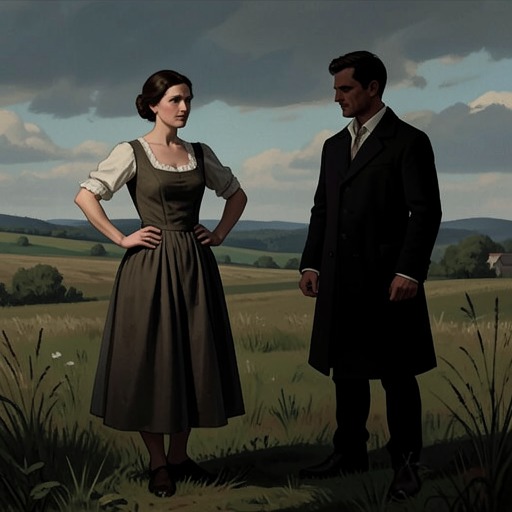
The sale turns a boundary quarrel into a question of responsibility. Anne goes to Harrison to explain what happened, acknowledging that she acted without thinking and offering him the money or her own cow instead. Harrison, who had previously confronted her in anger, forgives her and says he would rather take Anne’s cow in exchange. The exchange resolves the immediate dispute through a practical substitute, while Anne’s willingness to confess and make restitution marks the difference between her impulsive decision and her effort to repair its consequences. The account ties the breed to a specific plot reversal: a cow in the oats first seems to repeat an old nuisance, but the mistaken sale makes the animal the occasion for reconciliation between Anne and Harrison.
Cattle, Pasture, and Rural Conditions
The novel places cattle within a landscape that can seem richly abundant but is subject to material hardship. On a September outing across the hills of Prince Edward Island, Anne and Diana travel through fields and woods in a scene of youthful pleasure. That pastoral setting is not separate from farm work: the story also presents the oatfield as a crop Harrison needs to protect and the dividing fence as a practical condition of keeping animals from it.
During a prolonged dry spell, Anne describes the fields as parched and her garden as suffering. Harrison’s pastures, she reports, are so scorched that his cows can hardly find enough to eat, and he feels guilty when he sees them. This detail broadens the novel’s attention from one cow’s trespassing to the difficulty of maintaining livestock when pasture fails. The animals are not merely scenery in the rural idyll; their access to food registers the consequences of weather on ordinary farm life.
The Hailstorm and the Limits of the Pastoral
On May 23, an unusually warm day gives way to a severe hailstorm. Anne dismisses school when she hears thunder, and the hail later leaves a deep white covering across Avonlea. When it melts, crops and garden growth have been cut down, apple blossoms stripped, and many of the trees planted by the Avonlea Village Improvement Society broken or torn apart. Reports from across the province include the deaths of exposed young stock, although the narrative does not specify their breed.
The storm’s damage places the earlier pasture shortage in a wider pattern of agricultural exposure: cattle depend on fields that may be scorched by drought or devastated by sudden weather. Jersey cattle therefore link the novel’s intimate scenes of ownership and neighborly conflict with the less controllable conditions of farming. Dolly’s story turns on a fence, a promise, and an improvised exchange; the storm reminds the reader that even careful arrangements cannot protect livestock and crops from every force affecting rural life.